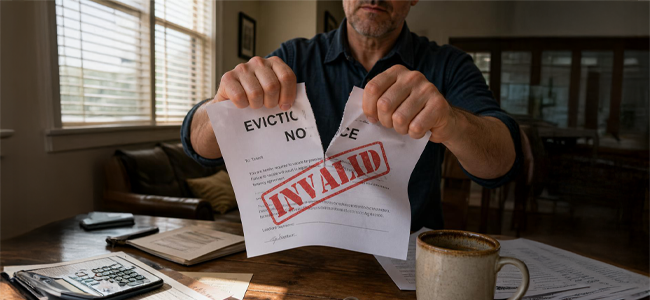
“… for the benefit of immunity from liability for its debts, those running the corporation may not use its formal identity to incur obligations recklessly, grossly negligently or fraudulently. If they do, they risk being made personally liable.” (Quoted in the judgment below)
Particularly in hard times, it is not at all uncommon to find yourself unable to recover a debt from a company in financial straits whilst at the same time you know that its directors hold assets in their own names. Can you attack them personally?
The answer is founded in the centuries-old concept of companies as separate legal entities or “juristic persons”. They trade in their own names and have their own assets and liabilities, so as a rule directors will not be personally liable for a company’s debts unless either –
- They signed personal suretyship for them, or
- They fall foul of one of our law’s provisions entitling a court to declare them personally liable.
So, in the absence of personal suretyships, when in practice can you recover a company debt from its director/s? And when are you as director at risk of being sued personally?
Let’s look at the facts and outcome of a recent High Court case for some insights –
The fraudulent car auction, the disappearing company and the director’s defence
- The buyer of a car on auction subsequently discovered that it was a 2010 model despite being sold to her as a 2012 model.
- She cancelled the sale, returned the car to the auction company that had sold it to her, and, when her demand for a refund of the purchase price was refused, took a default judgment against the company.
- What followed was a saga of unsuccessful attempts to recover her money from the company, its address having changed and the director claiming to have resigned and sold the company, which he said had ceased trading and was awaiting deregistration.
- The buyer eventually sued the director personally, asking the Court to “pierce the corporate veil”. The director’s defence boiled down to saying that he had not used the company “as a front”.
Piercing the corporate veil
“Piercing the corporate veil” in this context is, simply put, a court holding directors personally liable for a company’s debts by declaring that the company is to be “deemed not to be a juristic person” in respect of particular debt/s.
On what grounds will a court make such a declaration? Per the High Court in this matter:
- Where there is “fraud and the improper use of a company or conduct of the affairs of a company” or
- “[W]here its incorporation, use or an act performed by or on its behalf [the Court’s underlining] constitutes an unconscionable abuse of the juristic personality of the company as a separate entity.”
The director’s misrepresentation and “cavalier disregard” for the company’s interests
- On the facts, the Court found that the director had misrepresented the details of the motor vehicle to the buyer, that this misrepresentation was material and induced her to purchase the vehicle, and that it “was deliberate such that it amounted to fraud, alternatively dishonesty, further alternatively improper conduct.”
- “Additionally, as the director and owner, he acted with cavalier disregard for the interests of the company … Such conduct is manifestly not in the best interest of the company and may be considered reckless and dishonest. This conduct was indubitably with callous disregard for its effect on the company as a separate legal entity and at a time when he describes its financial situation as being parlous.Therefore, whilst a director is entitled to resign at any time, his resignation cannot be used as a means of evading his fiduciary duties as a director.”
- Concluding that “the conduct of the director adversely affected the [buyer] in a way that reasonably should not be countenanced and which constitutes an unconscionable abuse of the company’s juristic personality”, the Court declared him personally liable to repay her the purchase price, interest, and costs.
Disclaimer: The information provided herein should not be used or relied on as professional advice. No liability can be accepted for any errors or omissions nor for any loss or damage arising from reliance upon any information herein. Always contact your professional adviser for specific and detailed advice.
© LawDotNews