“Don’t wait to buy real estate. Buy real estate and wait.” (Will Rogers)
Spring is in the air and, as the annual uptick in property sales kicks in, let’s address two questions commonly asked by both sellers and buyers who are unsure about exactly what happens after they sign their sale agreement:
- How does the transfer process work?
- How long does it take before the seller gets paid and the buyer becomes the new registered owner?
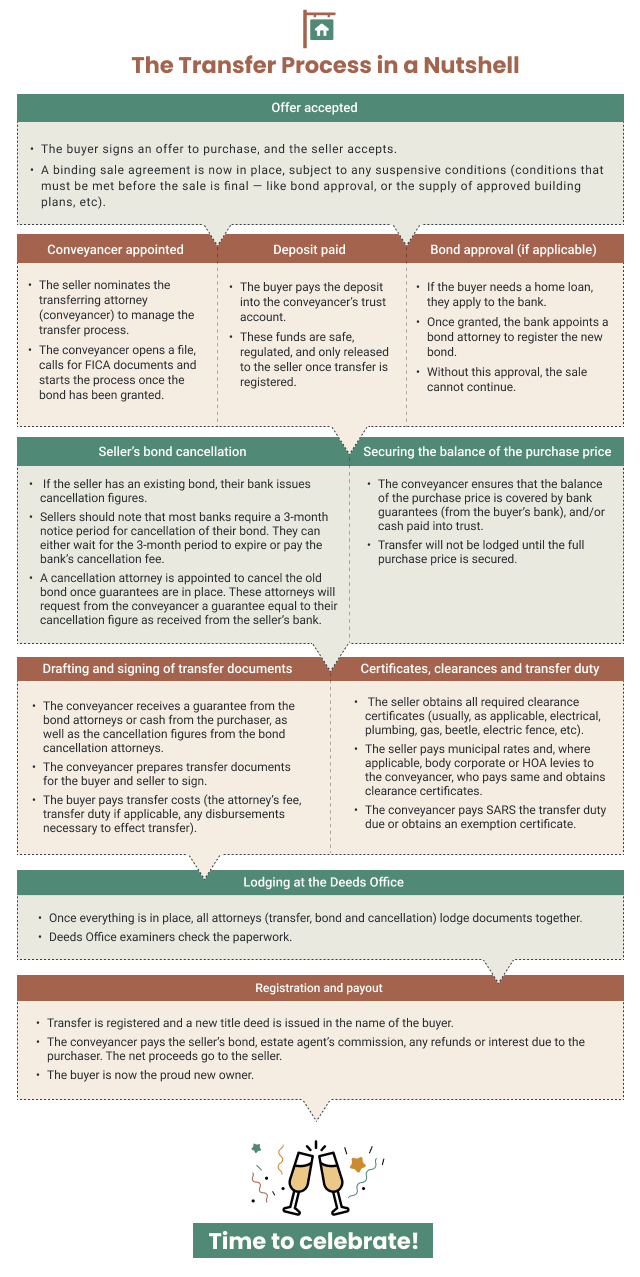
Let’s begin with this simplified “in a nutshell” flowchart of the transfer process:
How long does it all take?
How long is a piece of string? If everything goes swimmingly and the bureaucratic stars truly align in your favour, the total timeframe from signing the sale agreement to popping the champagne could be as little as eight weeks. On average, however, it’s safer to work on no less than ten to 12 weeks, and possibly a lot more.
What could delay things? This is a complicated process involving a disparate array of role-players and a host of opportunities for unforeseen delay. Some of the more common sources of delay (and frustration!) centre on bond approval, bank processes, SARS and municipal delays, clearance certificates and repairs, lost title deeds, intervening public holidays, and Deeds Office backlogs. But the list really is endless.
Bottom line: you need professionals in your corner to protect your interests and to move the process along as quickly as possible. We’re here to help!
Disclaimer: The information provided herein should not be used or relied on as professional advice. No liability can be accepted for any errors or omissions nor for any loss or damage arising from reliance upon any information herein. Always contact us for specific and detailed advice.
© LawDotNews